Table Of Content

Starting a new treatment for hair loss isn’t without doubts and anxiety, no matter how many positive results the procedure has produced. Especially when it concerns hair loss, most patients feel more cautious that any treatment may worsen their condition. Platelet-rich plasma (PRP) therapy is one of the popular solutions for hair thinning and hair loss, but some patients, especially the first-timers, could be wary that it could cause more hair loss.
Learn More About Platelet-Rich Plasma (PRP) Injections for Hair Loss in The AEDITION
It probably wasn't noticeable to anyone except for me, but it was enough hair loss to bring out some insecurities (especially with my wedding on deck) and get me looking for solutions. We asked hair loss experts and Keeps medical advisors Dr. Jerry Shapiro and Dr. Antonella Tosti. Keep in mind that results will look different for everyone based on overall health, blood platelet levels, and hair health. And there’s some promising research suggesting that PRP may work for other types of hair loss.
The True Cost of Hair Loss Treatments - Allure
The True Cost of Hair Loss Treatments.
Posted: Thu, 02 Sep 2021 07:00:00 GMT [source]
The Benefits of PRP Therapy Over Time
And there are seemingly hundreds of different hair loss treatments with varying levels of reliability and success. Once the results become more apparent, Dr. Jobarteh-Williams says it’ll be recommended that your maintenance treatments move to once or twice a year thereafter. Dr. Kourosh adds that the best results are seen in people who combine PRP treatments with other therapies for hair growth. When experiencing hair loss, sometimes supplements and hair growth products won’t be enough. If you’ve found yourself in that camp and are looking for a real treatment with proven results, then this in-office procedure might just be for you.
If you are looking for PRP For Hair Loss Treatments, you can find more information here
Hair shedding after PRP hair treatment is common and shouldn’t be a cause of concern. While there might be risks of hair loss worsening, these are rare and may easily be avoided by keeping your dermatologist updated about your progress and seeking a reliable clinic. Those taking blood-thinning medication, such as antiplatelet and anticoagulants due to their heart condition, aren’t advised to proceed with PRP therapy. The medications they’re taking affect platelet count, which is important for the procedure. While there’s no harm in proceeding with the treatment, it wouldn’t be cost-effective because they wouldn’t receive the best results.
Patient 7
Now that you know what PRP is and how it works let’s understand what you need to do before and after a PRP treatment. This sort of treatment may not be the right option for you and that’s totally fine. My hairdresser put me onto this years ago because unlike many other dry shampoos this one doesn’t clog the pores. And what you are left with is hair that grows back slower and weaker or hair that completes the process too quickly thus resulting in a quicker turnover of hair. And for the questions that require medical expertise, the Elucell experts were more than happy to answer.
Providers by Specialties
Once you undergo a hair regrowth treatment, your hair follicles will become stimulated to activate into the anagen phase. They need to enter the telogen phase to grow new hair; that’s why you shed hair. New strands of thicker and healthier hair push the old hair out of the scalp. This 32-year-old patient was noticing thinning at the top of his scalp, and was concerned with overall hair density at the crown. He needed a solution that didn't require daily maintenance, and per Dr. Wise's recommendation, he opted for three sessions of Platelet Rich Plasma therapy.
Choosing the Best Dermatologist for You
In this post, we will understand what PRP treatment is and the steps to take before and after the treatment. If you can get routine blood tests done by your doctor and you are immunized regularly, PRP treatment won’t be too different from what you are already used to. This article is one person's experience and shouldn't be substituted for professional, personalised medical advice. Please chat to your GP or medical professional if hair loss is a concern for you.
Side effects
The PRP will be placed in a small syringe and then injected with a small needle into the areas of hair thinning (if hair loss is being treated). In areas of facial aging, PRP will be spread on your face at the time of microneedling. Some patients with a history of medical conditions aren’t qualified to receive PRP hair treatment. This cosmetic procedure may not be the best for those with alopecia areata. Patients with a history of auto-immune diseases, cancer, blood diseases, and others must inform their dermatologists right away before receiving PRP treatment.
Days Before Treatment
Platelet rich plasm (PRP) is produced by taking the your own blood and placing it in a centrifuge to concentrate the platelets. This concentration of platelets (or “PRP”) is then injected into the area to be treated. A downside to PRP therapy for hair loss is that treatment is expensive and rarely covered by medical insurance. Possible side effects following a PRP injections for hair loss procedure include minimal pain, pinpoint bleeding, rendess, full, tight sensations in the scalp, and headache. PRP (Platelet Rich Plasma) is a new and non-surgical method of hair loss treatment and hair restoration that works for women and men, it has become one of the most popular treatments in recent years.
The plasma is then injected with the concentration of platelets on your scalp. The blood platelets are the vital cells needed for the treatment because of their healing factors, which is why they’re responsible for wound healing and repairing damaged tissue. 23 year old male treated with 3 sessions of Platelet Rich Plasma therapy.
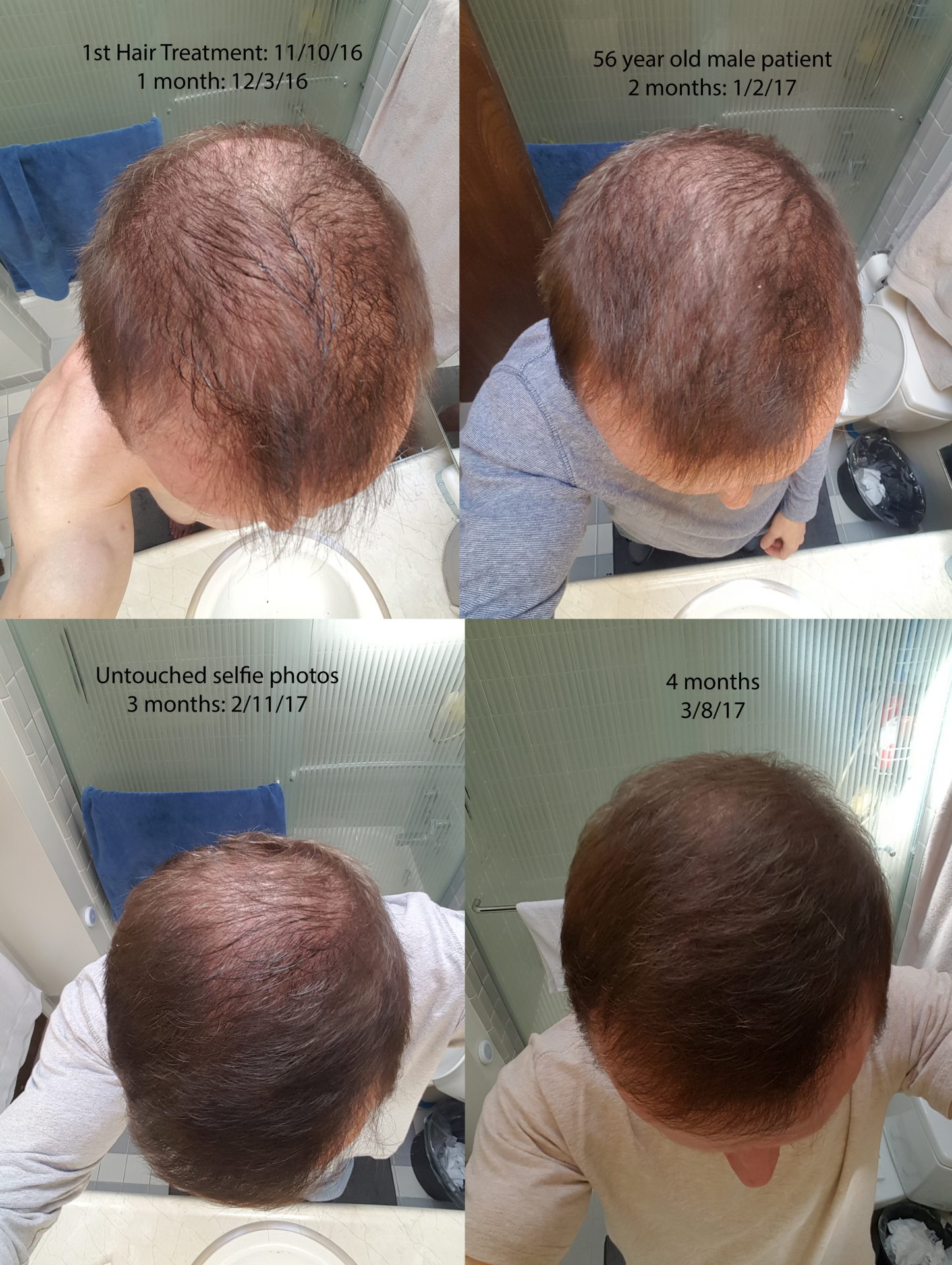
In the photos below, you can see the effects of PRP on male pattern hair loss. The first picture shows the patient before he started treatment, and the second picture shows increased hair growth and thickness after 3 monthly sessions of PRP. Since PRP hair loss treatment is a minimally invasive procedure, most patients suffering from alopecia are qualified for this. Those with good overall health and lifestyle may experience the best hair restoration results, so you should be willing to lead a healthy lifestyle after the procedure. Patients with no history of medical conditions, not a chain smoker, or on any type of blood pressure medication may benefit from PRP hair treatment.
The possibility must be considered that this regrowth may have occurred naturally if PRP had not been used. As you’ll see in the photos below, PRP can have a big impact on hair loss. Significant improvements in hair regrowth are often visible after just 3 months. During the PRP preparation process, blood is taken from your arm and placed into a centrifuge machine. The centrifuge separates blood into fractions with different density, making it easy to harvest the PRP. The PRP is processed and injected into the areas of your scalp affected by hair loss.




No comments:
Post a Comment